What We're Building
'People have tried to pit us against each other, we've resisted the myth that we must collapse what we are each doing into one thing, as the only way to be in deep solidarity, and building together, and alongside each other' - Imandeep Kaur
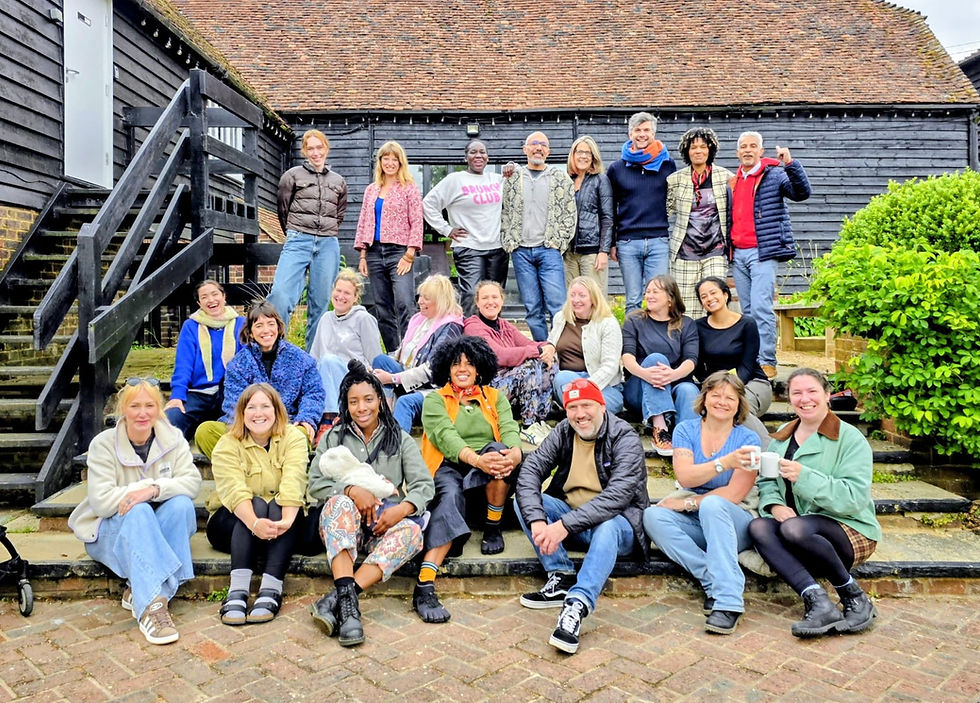
We are so grateful to be hosted by CIVIC SQUARE alongside HOOD FUTURES STUDIO, Footwork Trust, Platform Places and the Mycelial Network, hosting so many incredible peers from across the country, all building in their places alongside their neighbours and communities.
Reflections from our Deep Go See with Civic Square & Hood Futures Studio
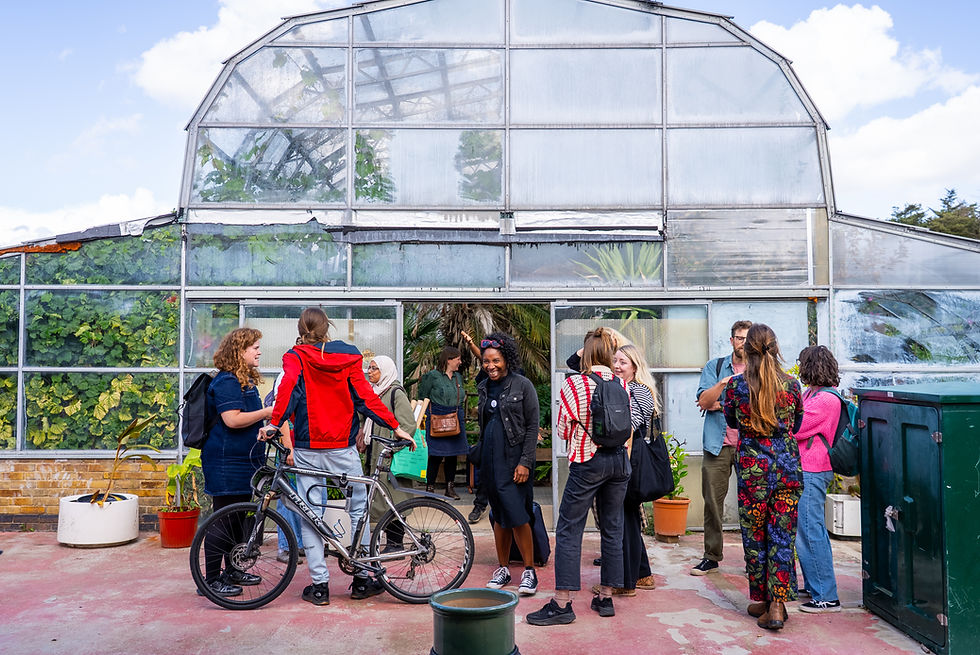
As people began arriving throughout the morning, there was a real sense of anticipation. We gathered just outside the site, sharing coffee, yoghurt and breakfast beside the water, with the Ladywood site stretching out in front of us. Some people had visited before, while for others it was their first time experiencing the scale of what CIVIC SQUARE and Hood Futures Studio are building.
Even behind the site's gates, you could already sense the ambition. Looking across the landscape, it was impossible not to recognise that this was more than a construction project. It was a long-term commitment to reimagining what neighbourhood development can be.

Cross-pollination
One of the things that makes Mycelial Network gatherings so valuable is the cross-pollination that naturally happens.
Alongside Community Asset Developers (CADs) from across the Network were people from neighbouring programmes and partnerships, including People & Place: Camden and others connected to this wider ecosystem of work. Relationships that don't often get to exist in the same room suddenly had space to connect.
This Deep Go See also invited members to bring some of the people helping make their ambitions possible. Alongside Community Asset Developers were architects, designers, engineers and collaborators who are actively helping turn community vision into reality.
Old Diorama Arts Centre arrived with members of their team from Arup, while Lillie from Rewild the Ends was joined by Seth from Resolve Collective. People Dem Collective brought their architect, and Makespace arrived with members of their wider team. It created a different kind of conversation, one where the people asking questions weren't only those leading organisations, but also those helping shape buildings, governance, design and delivery.
It shifted the conversation beyond organisational updates and towards genuine collaboration, creating space for the people designing, building and stewarding these projects to learn directly from one another, alongside the communities and organisations they support.

More than a site visit
As Amahra and Immy welcomed us into the day, they reminded us that although the site itself is extraordinary, this wasn't simply a tour of buildings.
The Ladywood site is the physical manifestation of more than fifteen years of organising, experimentation and collective practice. It represents where CIVIC SQUARE and Hood Futures Studio have arrived so far, but it is still very much a work in progress.
The invitation wasn't to admire what had been built.
It was to get underneath the work.
To explore the difficult questions that emerge when communities move from vision to ownership, from ownership to construction and from construction to long-term stewardship.
A place for experimentation
Walking through the site, it became clear that almost every space had become part of that learning journey.
The polytunnel, in particular, felt like a living archive of experimentation.
As CIVIC SQUARE has navigated land acquisition and now moves through the planning process, the space has become somewhere to test ideas, invite neighbours into the process and openly share the learning along the way.
Inside were extensive pre-planning documents, research, material experiments, prototypes, sketches and stacks of publications available for anyone to browse or take away.
Nothing was hidden.
There was no gatekeeping of knowledge.
Instead, it embodied one of the strongest themes of the day: if we're serious about building a movement of community asset developers, we have to become better at making our processes visible so others don't have to start from scratch.
Radical hospitality in practice
We also spent time in The Yard, where Hood Futures Studio first began creating space for imagination before plans for the wider site had taken shape.
Standing there, you could see how the practice of radical hospitality has informed every stage of the vision.
Alongside drawings for the future hotel and theatre sat conversations about why those spaces matter. Amhara reflected on the research that informed Hood Futures Studio's thinking - seeing Birmingham not simply as a city with culture, but as an ecosystem of cultural practice that deserves long-term infrastructure to sustain it.
The proposed hotel isn't simply accommodation.
It's part of that ecosystem.
A way of creating the conditions for artists, organisers, neighbours and visitors to stay, contribute to and participate in the life of the place over time.
Choosing the questions
The afternoon became an invitation to follow curiosity.
Rather than everyone moving through the same programme, participants chose the conversations that felt most relevant to the work they're currently navigating.
Across CIVIC SQUARE and Hood Futures Studio, workshops explored:
Transitioning to Construction
Design Principles & 3°C Neighbourhoods
Governance for Generations
Disability Justice & Architecture
The Building as an Archive
Site as a Classroom: Co-Building with Neighbours
Legal Activism for Community-Centred Space
Alongside these were opportunities for informal conversations, creative workshops, coffee, cake and, of course, a generous lunch complete with incredible Basque cheesecake ice cream and endless conversations that continued well beyond the table.
It was less about finding answers and more about finding people asking similar questions.

Asking more of one another
The day closed with a conversation featuring People Dem Collective, Hood Futures Studio, CIVIC SQUARE, Black Females in Architecture and Onion Collective, exploring the political conditions shaping this work and why community-led development matters now more than ever.
Rather than focusing solely on individual projects, the discussion returned again and again to place, responsibility and the long-term work of building communities that can steward themselves. For Victoria this means …
“can we look back to 100 years and show we have infrastructure as legacy that creates equity for our community to create mobility for our peers beyond Margate”
One reflection from the day has stayed with us.
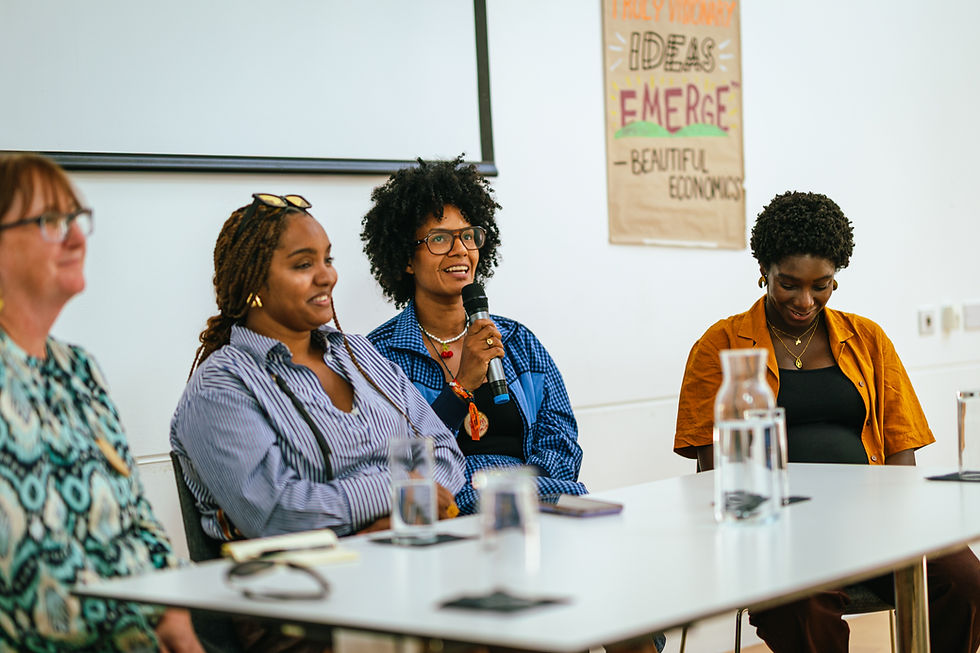
As Immy shared during the closing conversation, this feels like a moment to ask more of one another.
“Stay in the anger. Being honest calls us to attention. It helps us get into the right postures. Let this be the beginning of our story.”

That feels like an important invitation for the Network. As Naomi from Footwork put it in the closing moment of the gathering
“For those of you who’re in spaces like this for the first, ask for help, ask your question, we need To share radically and speed up the time between having the vision and building it.”
Our Deep Go Sees aren't opportunities to just compare battle scars or showcase polished success stories. They're opportunities to strengthen the relationships that make this work possible, to share openly, to expose what's unfinished, and to learn from each other's experiments.
Every community asset developer is building in a different place, with different histories, communities and challenges.
But many of the questions we're navigating are shared.
And perhaps that's what this day reminded us most clearly.
We're not simply building projects.
We're building a movement.
📸 Photograph by Angela Grabowska
Website: https://angelagrabowska.com/
Instagram: https://www.instagram.com/angela.grabowska
✏️ Illustrations created by Jimmy Rogers / CIVIC SQUARE for What We're Building.